

I decided to front-extend a business trip to Dayton with a weekend in Chicago. I had VividSeats for Helen Hunt in Betrayal, when I booked that was the only available ticket.
I heard that Harold Pinter’s 1978 play Betrayal is one of the most compelling studies of infidelity, trust, and the passage of time in modern drama. It is best known for its unique reverse chronological structure, which starts at the end of a love affair and gradually works backward to its very inception. The play is largely autobiographical, inspired by Pinter’s own extramarital affair with Joan Bakewell, and it examines the emotional intricacies of deceit—not just between lovers, but also among friends.
Over the years, Betrayal has seen several notable stage and screen adaptations, including the 1983 film starring Jeremy Irons, Ben Kingsley, and Patricia Hodge.
The 1983 adaptation of Betrayal is perhaps the most well-known, with Jeremy Irons playing Jerry, the man who carries on an affair with his best friend Robert’s wife, Emma (Patricia Hodge). Ben Kingsley gives a masterful performance as Robert, whose knowledge of the affair is revealed gradually throughout the film.
What makes this adaptation stand out is its faithful adherence to Pinter’s sharp, minimalist dialogue and the precise, restrained performances of its actors. Jeremy Irons embodies Jerry with a mix of charm and melancholy, perfectly capturing the character’s internal conflict. Kingsley, on the other hand, delivers a chillingly controlled portrayal of Robert, a man who, despite his composed exterior, exudes quiet menace as he confronts the betrayal.
Themes
At its core, Betrayal is about the complexity of human relationships and the way people deceive not only others but also themselves. The play explores the nature of trust and how easily it can be broken, often by those closest to us. Through its reverse chronology, Pinter forces the audience to reexamine events with fresh understanding, highlighting how memories can shift in meaning over time.
Another key theme is power dynamics. The affair isn’t just about love or passion—it’s about control. Robert, despite being the betrayed husband, seems to hold the most power, as he is revealed to have known about the affair long before he lets on, and also has several of his own. Meanwhile, Jerry and Emma struggle with their own illusions of agency, as they realize they are not as in control of their destinies as they once believed.
Time also plays a crucial role. Because the story is told in reverse, moments that seemed poignant at first become tainted by hindsight. What begins as a tender love story devolves into a dissection of deception and regret, underscoring how past decisions shape our futures in ways we often fail to anticipate.
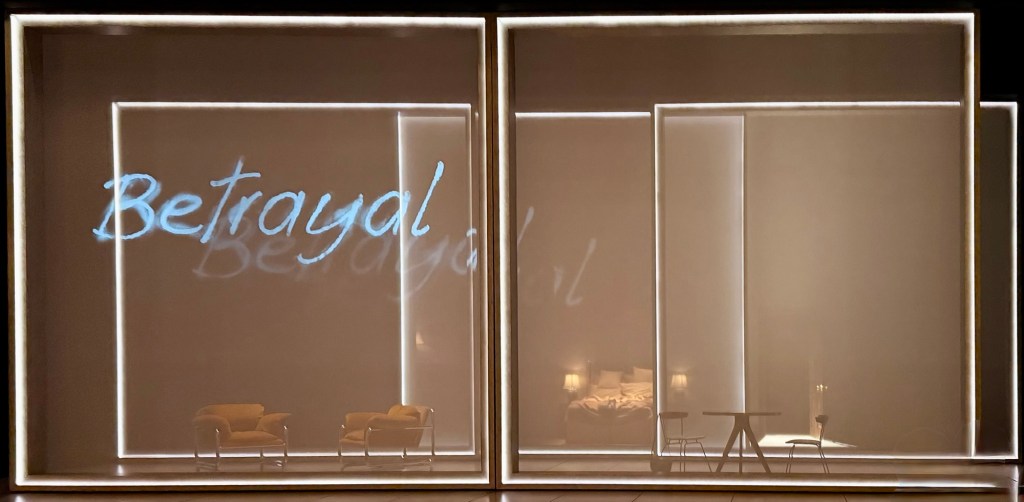
The Chicago Version I saw
The Goodman Theatre’s rendition of Betrayal has garnered widespread acclaim for its insightful direction and compelling performances. Critics have lauded the production’s nuanced portrayal of Pinter’s intricate characters and themes.
Zac Thriffiley of Broadway World praised the production, stating that it “provides audiences with a sincere and sympathetic take on a modern classic.” He highlighted Booth’s adept handling of Pinter’s minimalist dialogue and the actors’ ability to convey depth through subtle gestures and pauses.
Nancy S. Bishop of Third Coast Review commended the performances noting that the actors “each perform their roles thoughtfully, with passion or quiet angst.” She also appreciated the set design’s effectiveness in conveying the play’s shifting timelines and settings.
Katy Walsh from The Fourth Walsh described the production as “a sleek production,” emphasizing the ensemble’s ability to deliver the relational complexities with “guarded emotionality.”
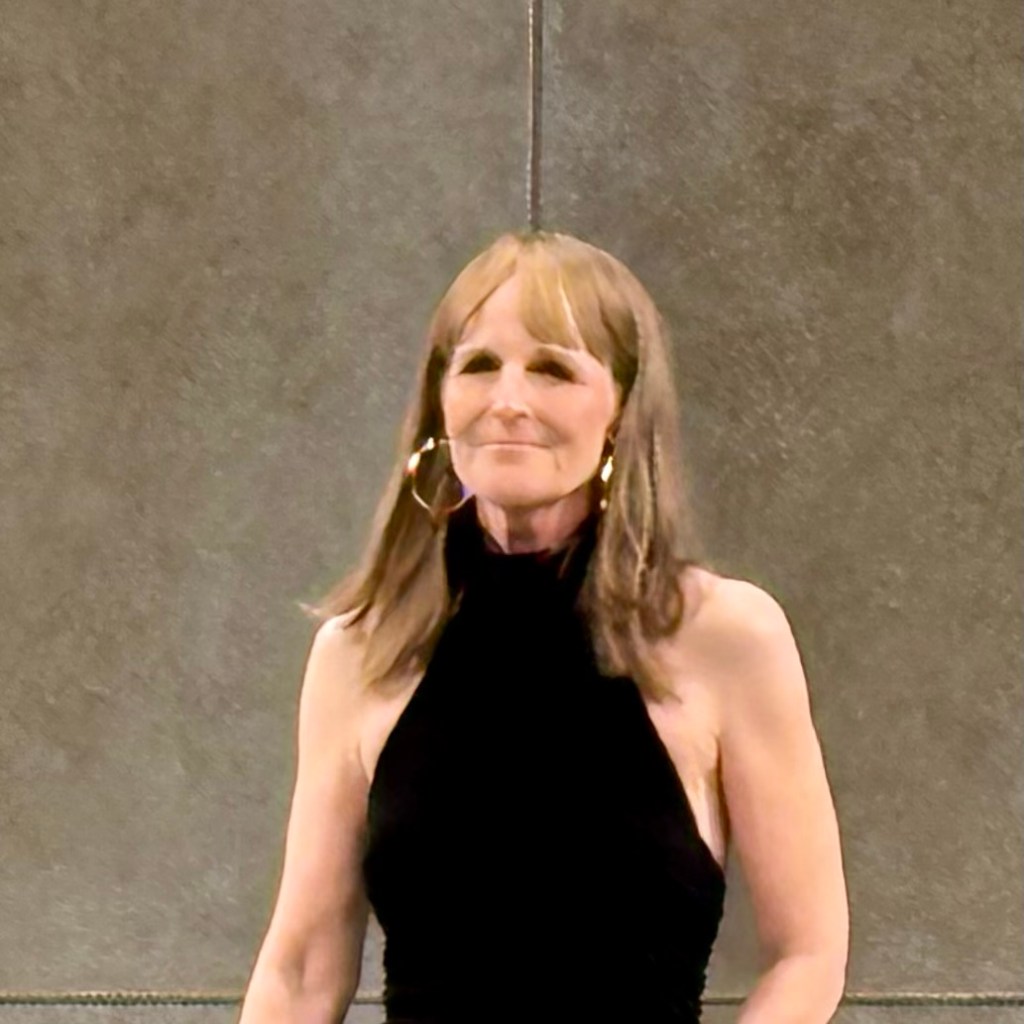
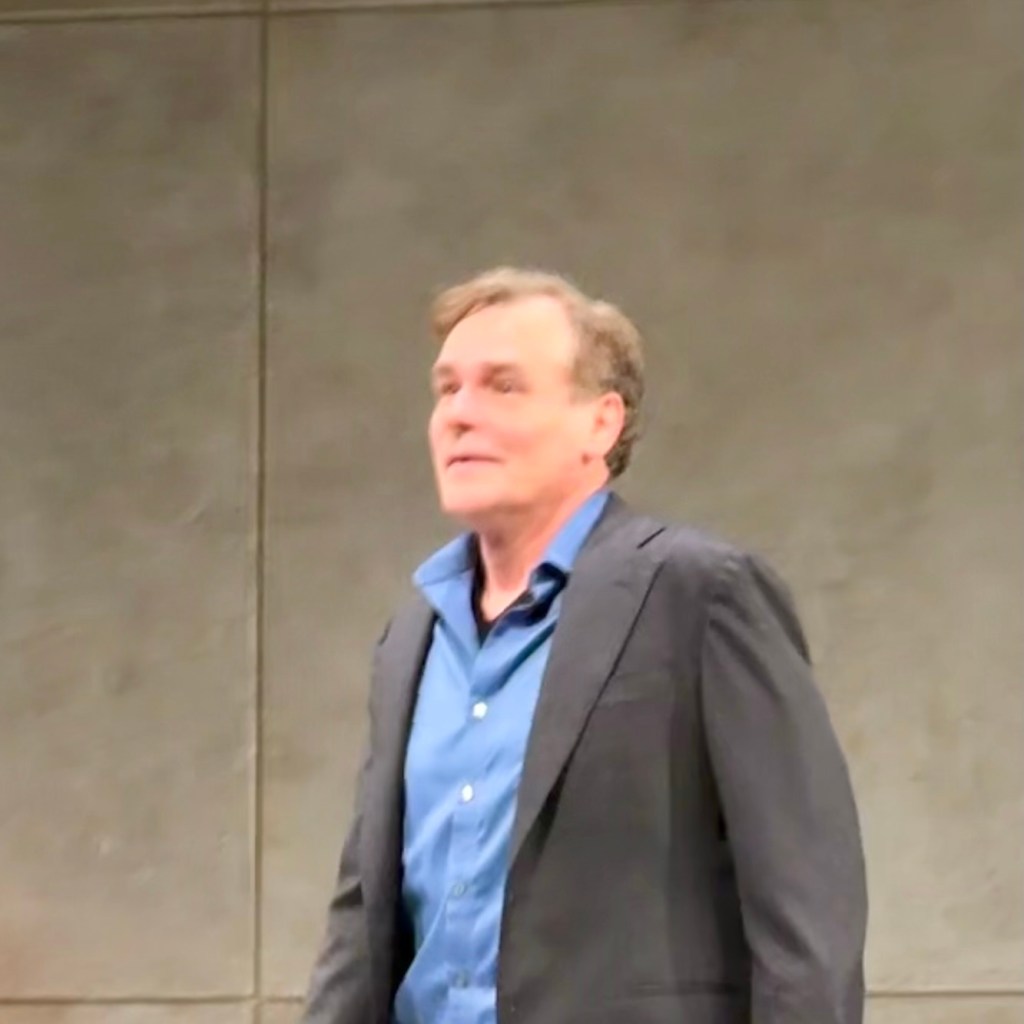


The cast’s portrayal of the central characters has been a focal point of critical acclaim. Helen Hunt’s Emma is depicted as a woman of “quiet vulnerability,” bringing depth to her emotional conflicts. Robert Sean Leonard’s Jerry balances charm with guilt, capturing the essence of a man entangled in a web of deceit. Ian Barford’s Robert exudes a “chillingly controlled” demeanor, embodying the complexities of a husband betrayed by both his wife and best friend.
Susan V. Booth’s direction has been celebrated for its fidelity to Pinter’s vision while introducing contemporary sensibilities. The minimalist set design by Neil Patel, complemented by Rasean Davonté Johnson’s projections, effectively delineates the play’s various settings and time periods. The use of long pauses and silences, characteristic of Pinter’s style, adds to the production’s tension and depth.
Overall a great evening for sure to stimulate discussions if you there with your partner. The evening left me in thoughts …
 StageAficionado